



709 weeks. More than 13 years. That's how long one person waited for a community dietetics appointment in Ireland, according to The Irish Times.
The wait was recorded in the Longford-Westmeath area, against a wider backdrop of 298,421 people on community healthcare waiting lists in March 2026.
With staff shortages identified as one factor behind the delays, the case offers a stark indication of the pressure facing community services and a reminder that Ireland needs more qualified dietitians now.
For those considering the profession, that need is matched by opportunity. Dietetics is evolving rapidly, with today’s practitioners combining scientific expertise with communication, behavioural science, public health knowledge, and evidence-based decision-making to improve health across diverse communities.
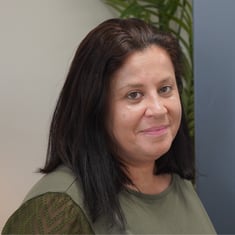 Drawing on more than 25 years of experience across clinical practice, research, and higher education, CORU-registered dietitian Roberta Mendes, RD, PhD, Programme Lead for the MSc Dietetics (Pre-registration) at Portobello Institute, explores the key trends shaping the future of dietetics in Ireland.
She also explains how these developments have helped define the master’s degree programme, ensuring students build the scientific, clinical, and interpersonal skills required to respond to the realities of modern dietetic practice.
1. Dietitians Are Becoming Central to Preventative Healthcare
Dietitians play an important role not only in treating disease, but also in helping to prevent it. As Roberta explains, changes to diet and eating habits can reduce the risk of certain conditions and support better long-term health.
“One of the biggest changes we’re seeing, both in Ireland and internationally, is the growing emphasis on prevention,” she says. “Healthcare is placing much greater value on helping people stay healthy and prevent disease, rather than only treating illness.”
Clinical care remains central to dietetics, with dietitians supporting people to manage complex conditions and reduce the risk of complications. Increasingly, however, they are also intervening earlier by helping individuals establish healthier, more sustainable habits.
2. Demand Is Growing Across the Healthcare System
While the 709-week wait is an extreme example, it reflects a wider issue: community healthcare services are under significant pressure, and more qualified professionals, including dietitians, are needed to meet growing demand.
“Currently, Ireland and the UK have a shortage of healthcare professionals, including dietitians,” Roberta explains. “The profession is continuing to grow, and there are now more career opportunities than ever before.”
Publicly funded systems such as Ireland’s HSE and the UK’s NHS, along with private hospitals, remain major employers of dietitians. However, careers now extend well beyond hospitals.
Dietitians work in community services, supporting people with long-term conditions, disabilities, and specialist nutritional needs. Opportunities are also growing in public health, research, education, food production, sports nutrition, pharmaceuticals and health technology, as well as private practice and specialist services.
Through 1,000 hours of supervised placements across both years of Portobello Institute’s MSc Dietetics (Pre-registration), students gain valuable first-hand experience across a range of dietetic practice settings, helping them understand the breadth of the profession while building confidence for their future careers.
3. Behavioural Science Is Shaping Modern Dietetic Practice
Modern dietetic practice places greater emphasis on understanding the behaviours and circumstances behind a person’s food choices.
Even the best scientific advice has little impact if a patient cannot put it into practice. Food choices are shaped by far more than nutritional knowledge. Cost, culture, family routines, working patterns, health conditions, and emotional wellbeing can all affect what someone is able or willing to change.
Roberta points out: “Dietetics isn’t just about understanding nutrition. It’s about helping people make sustainable changes to their behaviour.”
Rather than simply telling patients what to change, dietitians use behavioural science, motivational interviewing, and patient-centred communication to explore what may be standing in the way. They then work collaboratively with patients to identify practical steps that feel manageable and can be maintained over time.
This approach requires dietitians to listen carefully, build trust, and navigate complex or sensitive conversations with empathy.
As Roberta puts it: “Dietetics is for people who like people. You need empathy, good communication and a good set of social skills.”
These communication and behaviour-change skills are embedded throughout the MSc Dietetics (Pre-registration) programme, including in Behavioural Science, a dedicated first-year module.
4. Dietitians Increasingly Tackle Nutrition Misinformation
Today, people have access to an enormous amount of nutrition information online, from TikTok videos recommending the latest supplement to websites making bold claims about rapid weight loss.
Roberta cautions that widely shared advice is not always accurate, balanced, or supported by evidence. Sometimes, she explains, it can be difficult to distinguish credible guidance from opinion. This makes research literacy a defining skill of the modern dietitian.
“On our MSc Dietetics (Pre-registration), students learn how to critically evaluate research, identify reliable sources of information, and make evidence-informed clinical decisions,” Roberta says.
Dietitians must be able to assess the quality and relevance of the evidence before translating it into clear, practical guidance.
“It’s not enough to know the science,” Roberta adds. “Students also need to learn how to communicate evidence clearly and responsibly.”
As more conversations about health and nutrition take place online, qualified dietitians have an increasingly vital role in challenging misinformation and making trustworthy, evidence-based advice accessible.
5. Career Pathways Are Evolving
A career in dietetics does not have to follow one predetermined route. Dietitians may work in hospitals, private clinics, and public health, but opportunities also extend across education, research, and industry.
Take product development, for example. Dietitians can work with food manufacturers to improve the nutritional profile of products, develop options for people with specific dietary needs, contribute to nutritional supplements, and help ensure health claims are accurate and supported by evidence.
For Roberta, dietetics has provided a stable career rich in opportunity. She began by offering sports nutrition consultations, moved into hospital practice, and later completed a master’s and PhD. Since then, her career has spanned research, university teaching, maternal and child nutrition, and private practice.
Digital platforms are creating further possibilities. During the pandemic, Roberta – who is originally from Brazil – began sharing Portuguese-language nutrition content on Instagram.
Her profile grew to more than 3,000 followers, and people began approaching her for consultations. She now also shares nutrition content through a successful English-language Instagram account.
“Knowing how to communicate your expertise is just as important as having it,” Roberta says. “This is something I aim to teach my students – how to build a responsible professional identity.”
6. Care Is Becoming More Culturally Responsive
There is no single eating pattern appropriate for every patient. Dietary recommendations need to consider medical needs, lifestyle, finances, preferences, access to food, culture, and food traditions.
“A dietitian needs to be trained to have multicultural intelligence,” Roberta explains. “In Ireland, we have a huge diversity of people with different food habits and different cultures.”
Culturally responsive practice means understanding the role foods and customs play in someone’s life. A dietitian may adapt recipes, portions, or eating patterns while retaining valued traditions, making advice more realistic and helping to build trust.
7. Dietitians Are Connecting Human Health with Planetary Health
The decisions dietitians support can have consequences far beyond an individual patient’s health.
“The job of a dietitian is not only connected with patients; it’s connected with the planet,” Roberta says. “A dietitian needs to think about the sustainability of the diet that he or she is planning.”
This can mean considering food production, dietary variety, waste, affordability, and access to ingredients when developing recommendations.
However, sustainable practice is not about prescribing one supposedly perfect diet. Advice must still be nutritionally appropriate, culturally relevant and realistic for the person receiving it.
Dietitians are well placed to translate broad sustainability goals into practical, achievable guidance without overlooking cost, culture, or the realities of everyday life.
A Career in Dietetics: How the MSc Dietetics (Pre-registration) Gets You There
For aspiring dietitians, the opportunities are abundant. Dietetics is an in-demand, modern, and evolving career that offers the chance to make a lasting and deeply personal difference to people’s lives.
Portobello Institute's MSc Dietetics (Pre-registration) prepares students for registration and professional practice as dietitians through a combination of scientific and clinical study, behavioural science, evidence-based practice, research, practice placements, and simulated patient scenarios.
Roberta reflects: “Our programme is designed to give students a strong scientific foundation while preparing them for the realities of modern dietetic practice.
“Alongside clinical knowledge, you will develop skills in communication, critical thinking, evidence appraisal, and professional practice that will support you throughout your career.”
Ready to Become a Dietitian?
Explore Portobello Institute’s MSc Dietetics (Pre-registration) and start your online application to take the next step towards becoming a registered dietitian.
You can also learn more about the professional registration pathway with CORU in Ireland and HCPC in the UK by reading this article.

%20Your%20Eligibility%20and%20Registration%20Pathway%20Explained-1.png?width=352&name=MSc%20Dietetics%20(Pre-registration)%20Your%20Eligibility%20and%20Registration%20Pathway%20Explained-1.png)