



Key Takeaways
- A typical day as an early years practitioner involves supporting babies, toddlers, and young children through play-based learning, observation, and responsive care.
- A career in early childhood care and education is centred on making a meaningful difference during some of the most formative years of a child’s life.
- You can become an early years practitioner at different stages of life, whether you are starting out, changing direction, or progressing professionally.
For an early years practitioner, making a difference often happens through the smaller moments: the moments spent encouraging curiosity, noticing progress, creating opportunities to explore, and helping children feel secure enough to discover what they can do.
Working in early childhood care and education is about supporting children during some of the most formative years of their lives. Your role can influence how they learn and develop. You can shape how they experience the world around them. You can create an environment where every child can take part and thrive.
Whether you’re considering your next steps after the Leaving Certificate, already working with children and want to develop professionally, or ready to embrace a new professional direction after years in a different field, a career as an early years practitioner can emerge from a range of different starting points.
Your Next Step: An Early Years Degree in Ireland
Portobello Institute’s BA (Hons) Early Childhood Care and Education is designed to prepare you for working in the sector in Ireland.
Awarded by University of Essex and mapped to level 8 on the National Framework of Qualifications, this three-year early years degree is delivered through flexible blended learning in Dublin.
Alongside studying child development, inclusive practice, and early childhood education, the programme gives you a clear insight into what professional practice can look like day to day.
The degree can also provide a foundation for postgraduate study in areas such as play therapy, speech and language therapy, special educational needs, or early childhood leadership and management.
What Does an Early Years Practitioner Do in a Typical Day?
Early years practitioners can work across a range of settings, from preschool and Montessori services to community childcare organisations and family support services.
The day-to-day is varied and fulfilling. There is structure and routine, but the unexpected naturally comes with the role, calling on you to adapt to the needs of babies, toddlers, and young children as they arise.
You will spend a great deal of time interacting with children and observing how they learn, while also working closely with other early years professionals and communicating with parents, carers, and guardians.
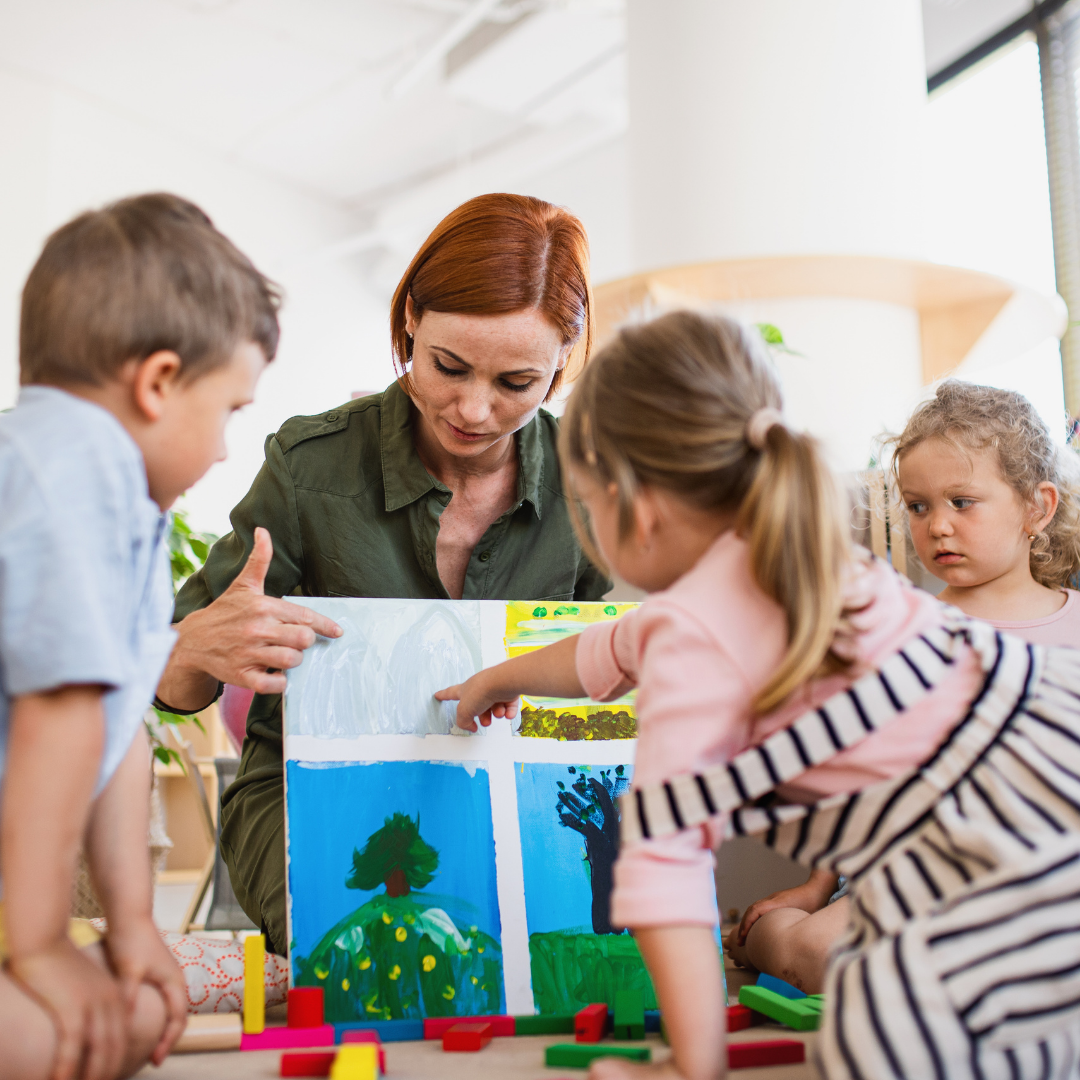
Play is central to the day, creating space for children to explore and for you to recognise learning as it happens.
Starting the Day
The start of the day can look very different from one child to the next. Some arrive ready to wave goodbye and head enthusiastically towards their favourite activity. Others may find separation more difficult and need extra reassurance as they settle in.
As an early years practitioner, you help shape how that transition feels. A calm, welcoming start can make it easier for children to find their feet and engage with what’s around them.
Arrival is also a chance to connect with parents, carers, or guardians. They may have something important to share about how their child is feeling that day or need a question answered.
From there, you continue getting to know the individual child, building a relationship with them and understanding how they learn and thrive.
Learning Through Play
Play is a huge part of early years practice. Through play, children learn and develop. They explore their interests and relationships while making sense of their world. It allows them to test ideas and solve problems in ways that feel enjoyable and meaningful.
A cardboard box might become a shop or a rocket. A tower of blocks can turn into an exercise in persistence when it falls down for the fourth time.
As an early years practitioner, you are there to notice what is happening within that play and decide when to get involved. Observation helps you understand what captures a child’s interest and how their learning is developing over time.
You might ask a question that takes an idea somewhere new or introduce something for a child to investigate. Sometimes, the most valuable thing you can do is step back and give them the freedom to continue.
This play-based approach is reflected in Aistear, Ireland’s early childhood curriculum framework, which places children’s interests and experiences at the centre of learning.
Play-based learning is also embedded throughout Portobello Institute’s BA (Hons) Early Childhood Care and Education. You will explore how play supports early learning as part of a wider focus on child development and inclusive education.
Planning Experiences for the Day
Early years practitioners plan experiences that reflect children’s interests and support their learning. Babies may be introduced to specific sensory materials. There could be an arts and crafts activity for toddlers. Older children may go on a walk to the park or explore something they have become curious about.
What matters is the thinking behind those experiences. Studying a BA (Hons) Early Childhood Care and Education develops practical skills in curriculum planning, helping you understand how to create learning experiences with clear purpose while still responding to children’s interests.
Recognising Learning in Everyday Experiences
Just as children learn through play, they also learn through everyday experiences. Mealtimes can help a toddler practise using a spoon to feed themself, for example, while getting ready to go outside can become an opportunity for an older child to build independence and confidence.
Part of your role is recognising what is happening beneath those everyday experiences. As your understanding of how children learn and develop grows, you can begin to see the significance in something that might otherwise appear very ordinary.
That understanding helps you decide when a child might benefit from encouragement and when to give them space to work something out for themselves.
Supporting Every Child to Take Part
Every child brings their own experiences, abilities, and background into an early years environment. Some children may also have a disability or need additional support to take part fully.
Inclusive practice means recognising those differences and considering what will help each child participate. An activity may need to be adapted, or the way you communicate adjusted, so the child can engage in a way that works for them.
For an early years practitioner, inclusion influences decisions throughout the day. The aim is to create an environment that keeps every child safe, respects who they are, and supports their wellbeing.
Working With Families, Carers, and Other Professionals
You will usually work closely with a team of other early years practitioners. Depending on the setting, that could be within a preschool service, Montessori, childcare centre, or community organisation.
Working as part of that team means sharing observations so everyone has a consistent understanding of how each child is getting on.
Parents, carers, and guardians are part of that communication too. A quick conversation at drop-off might give useful context for the day, while collection is a chance to share how their child has been getting on.
Some children may also be supported by other professionals, such as a specialist or therapist involved in their care. In those cases, early years practitioners can contribute to a more joined-up understanding of the child and the support around them.
What Skills Does an Early Years Practitioner Use?
Working in early years calls on skills that become part of your everyday practice. Some are visible in how you interact with children, while others shape the decisions you make behind the scenes.
|
During the day you might… |
Which draws on… |
|
Help a child settle after saying goodbye to a parent or guardian |
Empathy and relationship-building |
|
Extend a child’s play with a question or new resource |
Knowledge of child development |
|
Notice a change in a child’s communication or behaviour |
Observation and reflection |
|
Adapt an experience so another child can participate |
Inclusive practice |
|
Share information with a parent, carer, or guardian |
Professional communication |
|
Respond when an activity takes an unexpected direction |
Creativity and adaptability |
Becoming the Practitioner in the Room
It is one thing to picture yourself working with young children. Becoming the practitioner who understands what is happening within those everyday experiences takes professional knowledge and the chance to put it into practice.
Portobello Institute’s BA (Hons) Early Childhood Care and Education connects academic learning with workplace experience.
You complete 450 placement hours in Year 1 and a further 450 hours in Year 2, followed by 100 hours in Year 3, applying your learning in a real early years environment. If you already work in an eligible early years setting, you may be able to complete the practical element of your placement within your current role.
Placement gives you the chance to bring theory into real situations and see how what you have learned informs the way you work with children.
Could Your Future Be in Early Years?
A future working in early years and inclusive education can start with Portobello Institute’s BA (Hons) Early Childhood Care and Education.
Explore the programme online or book a call with a Career Pathway Consultant, who can guide you through the application process and answer any questions you have.
If you are working towards this degree, the first step is holding a QQI level 6 major award in Early Childhood Care and Education (ECCE), or an equivalent qualification. You can complete both your level 5 and level 6 qualifications at Portobello before progressing to the BA.
.png?width=352&name=Michelle%20-%20Blog%20Feature%20Images%20(27).png)
.png?width=352&name=Feature%20image%20(52).png)