



Sometimes, the best way to understand whether a career is right for you is to picture yourself in the day-to-day of the role.
What would your working day look like? Who would you work with? What would you spend your time doing? Would the pace and variety suit you? And, most importantly, would you find fulfilment and purpose in what you were doing?
If you’re thinking about becoming a dietitian or an occupational therapist, first-hand perspectives can help you look beyond the job title and see what each profession really involves.
Dietetics and Occupational Therapy: Two Different Professions, One Shared Focus
Dietetics and occupational therapy (OT) are distinct healthcare professions, each with its own specialist focus and expertise.
While their scope differs, both start in much the same place: understanding the person in front of you, what matters to them, and how their health and wellbeing shape everyday life.
Dietitians use nutrition science to assess individual needs and provide evidence-based guidance that can support health, manage medical conditions, and improve wellbeing.
Occupational therapists, on the other hand, help people participate as fully as possible in everyday life – from self-care and education to work, play, and independence.
In Ireland, “dietitian” and “occupational therapist” are titles protected by law, meaning only professionals who meet the required standards and are registered with CORU, the regulatory body, can use them.
Preparing to practise as a qualified dietitian or occupational therapist means developing specialist knowledge and real-world clinical experience.
Portobello Institute’s MSc Dietetics (Pre-registration) and MSc Occupational Therapy (Pre-registration) combine academic study, clinical skills training, and 1,000 hours of supervised clinical placements, while giving you the opportunity to learn from experienced CORU-registered practitioners.
What Does a Working Day Look Like?
There is no single working day that fully represents either profession. Your setting, area of practice, and the individual needs of the people you work with will all influence what your day looks like.
To bring both careers to life, we spoke to Portobello Institute’s Programme Development Leads, Dr Roberta Mendes for MSc Dietetics (Pre-registration) and Yvonne Phelan for MSc Occupational Therapy (Pre-registration), about their own clinical work and what a typical day can involve for them.
Inside Roberta’s Working Day as a Dietitian
“My clinical work focuses particularly on fertility, pregnancy, infant feeding, and feeding difficulties, so the people I see can be at very different stages of life.
“My day usually starts with checking my WhatsApp messages. My patients often send questions or photos of their meals for me to review. After that, I keep my social media profiles up to date, sharing stories from my daily routine or information that may be useful to my patients.
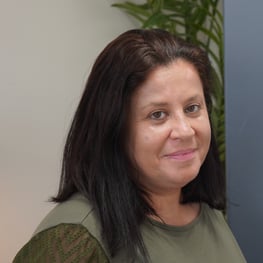 “Before a consultation, I go through my patient’s questionnaire, which they complete in advance, alongside any relevant clinical information. It gives me a picture of their history, routine, and what might be most important for us to discuss. I take note of the main points I want to cover and review their body weight, anthropometric measurements, and any blood test results.
“Most of my consultations take place online, which gives me the opportunity to work with people in a very flexible way. I also work with members of the Brazilian community, so consultations can take place in Portuguese or English.
“After a consultation, I write up my clinical notes, prepare or update the patient’s meal plan, and gather any resources they may need.
“For the families I am supporting during the weaning process, I prepare a weekly menu for the babies based on the mother’s update from the previous week. I check which allergenic foods have already been introduced and which still need to be included over the coming week.
“I meet many of my patients weekly to review their progress, update their meal plans, and answer any questions. My clinical work can also involve communicating with GPs, requesting blood tests by email, and reviewing new results when they come through.
“My role as Programme Development Lead at Portobello Institute allows me to bring my clinical experience into the MSc Dietetics (Pre-registration). I think it is really important for students to see how the knowledge and skills they are developing translate into real conversations, decisions, and patient care.”
Inside Yvonne’s Working Day as an Occupational Therapist
“I specialise in paediatric occupational therapy, working closely with children and their families.
“My days tend to start early. I wake up with my daughter and drop her to childcare for 7am, and I usually start my working day from there.
“I like to see service users face-to-face in the morning where possible. I work with children, and I find that they often have more energy for intervention sessions earlier in the day. My first client is typically around 8.30am, and I try to see two children during the morning.
 “No two sessions really look the same. We could be building obstacle courses, trialling regulation strategies, working on fine motor or typing skills, or simply chatting about how school is going.
“I work in a very child-directed way, so I follow the child's lead and build the session around their interests. Something like typing practice can be quite boring for a child, for example, so we might write silly sentences, do Mad Libs, or type about something they're really interested in.
“You're still working towards the same therapeutic goals, but in a way that is meaningful and enjoyable for that particular child. Everything is child-led and completed through play.“In the afternoon, I will often complete an autism assessment alongside a psychologist. We meet with the child and their parents in clinic and carry out an assessment looking at how the child interacts with us, the environment, and the different activities and toys available.
“There is also quite a lot of work that happens outside of the face-to-face appointment, including scoring, clinical discussion, and report writing. Clinical notes are essential. This allows me to keep track of what we worked on, how the child responded, and any changes or progress I noticed.
“At Portobello Institute, more of my time is spent on programme development, administration, and building relationships with services. This can involve connecting with potential placement sites, interviewing students, and working to make sure students have strong learning opportunities. I really enjoy having that mix because I get to continue working clinically while also being involved in supporting the next generation of OTs.
“I run my own practice, so somewhere in amongst all of that there is the less glamorous side of having your own business: taxes, reports, emails, admin, and keeping everything running! It means my days can be very varied, but that is one of the things I enjoy most about my work.”
Dietetics: More Than What Someone Eats
As a dietitian, Roberta specialises in fertility, maternal health, and paediatric nutrition, as well as diabetes and cardiovascular health. For her, understanding a patient means looking at much more than what they eat.
Their medical history, routine, lifestyle, medications, emotional wellbeing, and personal circumstances can all influence what nutritional advice is appropriate and realistic. Consultations can also uncover concerns that were not initially obvious, from feeding difficulties to possible eating disorders or wider health issues.
“Part of my role is to identify these potential concerns and recognise when a patient may need further assessment or support from another healthcare professional,” says Roberta. “This requires me to look beyond the patient’s food intake and consider the wider picture.”
.png?width=610&height=366&name=Feeding%20Therapy%20Rooms%20(1).png)
Feeding therapy room used to help children interact with food
That broader perspective is especially important in her fertility work, where nutrition may need to be considered alongside medication, supplementation, and ongoing treatment.
“The meal and supplementation plans need to meet their nutritional requirements while also being practical and sustainable within their daily routine,” Roberta explains.
“I also need to consider potential interactions with existing supplements or fertility treatment and, when necessary, communicate with their GP or other healthcare professionals to ensure the nutritional plan is safe and appropriate.”
Occupational Therapy: Understanding Everyday Life
Occupational therapy can take many forms across different ages, settings, and areas of practice. Yvonne works in paediatrics, where understanding a child begins with understanding what everyday life looks like for them.
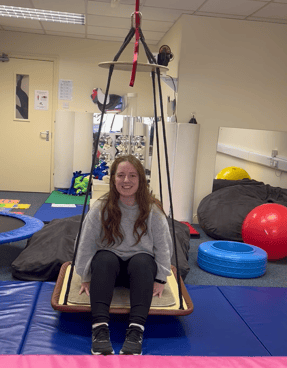 As an OT, she explores what they enjoy, what they find difficult, and what may be preventing them from taking part fully at home, in school or with friends.
Yvonne notes: “Sometimes something that seems quite small can have a big impact on a child's day – whether that's finding getting dressed difficult, struggling to sit and engage in school, finding handwriting exhausting, or not being able to join in with an activity their friends enjoy.”
Yvonne’s sessions are child-led and responsive to how the child is presenting. She may use movement, calming activities, or play to help them engage, adapting the session around their interests while still working towards therapeutic goals. Even when the activity changes, the purpose behind it remains the same.
“Being an OT is often about adapting in the moment while keeping the bigger picture in mind; what matters to this child, what they need or want to be able to do in their everyday life, and how I can help them get there,” says Yvonne.
How Can Dietitians Make a Meaningful Difference?
For Roberta, some of the most meaningful moments come from supporting patients through important changes in their lives.
A few years ago, she began working with a couple who were trying to conceive, preparing personalised nutrition and supplementation plans for them both. Months later, they returned for their first pregnancy consultation.
“It was lovely to see them again and to know that they are now living the dream they had been working towards,” reflects Roberta.
“Seeing their journey progress and knowing that I was able to support them along the way is one of the most fulfilling aspects of being a dietitian.”
How Can Occupational Therapists Make a Meaningful Difference?
The impact of occupational therapy is often most visible when something practised or developed in a session becomes possible in everyday life.
Yvonne uses the example of making a cup of tea. It might appear like a very ordinary activity, but being able to do it independently can represent confidence, participation, and greater autonomy for the person involved.
The significance lies not in completing the activity during therapy, but in what that ability makes possible beyond the session.
Yvonne explains: “It’s not really about someone being able to do something in an OT session with me – it’s whether they can take that skill or understanding and actually use it in their own life.”
Could You See a Future in Either Profession?
A career in dietetics or occupational therapy can take many different forms, but both offer the opportunity to work closely with people and make a positive, lasting difference in their lives.
If either feels like a profession you could picture yourself in, the next step is gaining the training and experience needed to progress towards professional practice.
Explore the MSc Dietetics (Pre-registration) and start your application.
Explore the MSc Occupational Therapy (Pre-registration) and start your application.
There’s More Than One Route…
Your pathway towards a career in dietetics or occupational therapy will depend on where you are starting from.
If you have not yet completed an undergraduate degree, Portobello Institute’s BSc (Hons) Applied Health Science can provide the academic foundation needed for postgraduate study in dietetics or occupational therapy.
For graduates who need the relevant health science prerequisites, the Postgraduate Certificate in Applied Health Science can help meet the academic requirements for progression to one of our pre-registration master’s programmes.
.png?width=352&name=Michelle%20IWD%20Feature%20Image%20(12).png)
.png?width=352&name=Michelle%20IWD%20Feature%20Image%20(11).png)