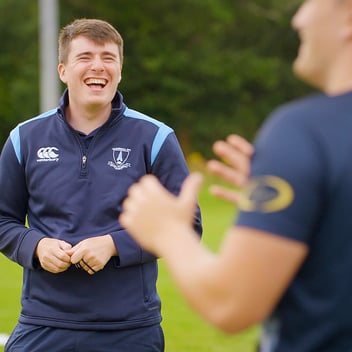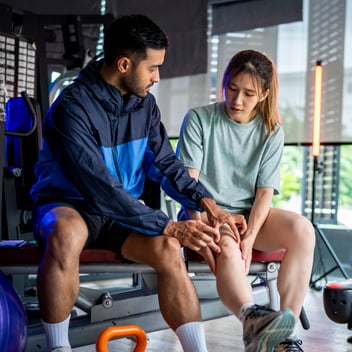


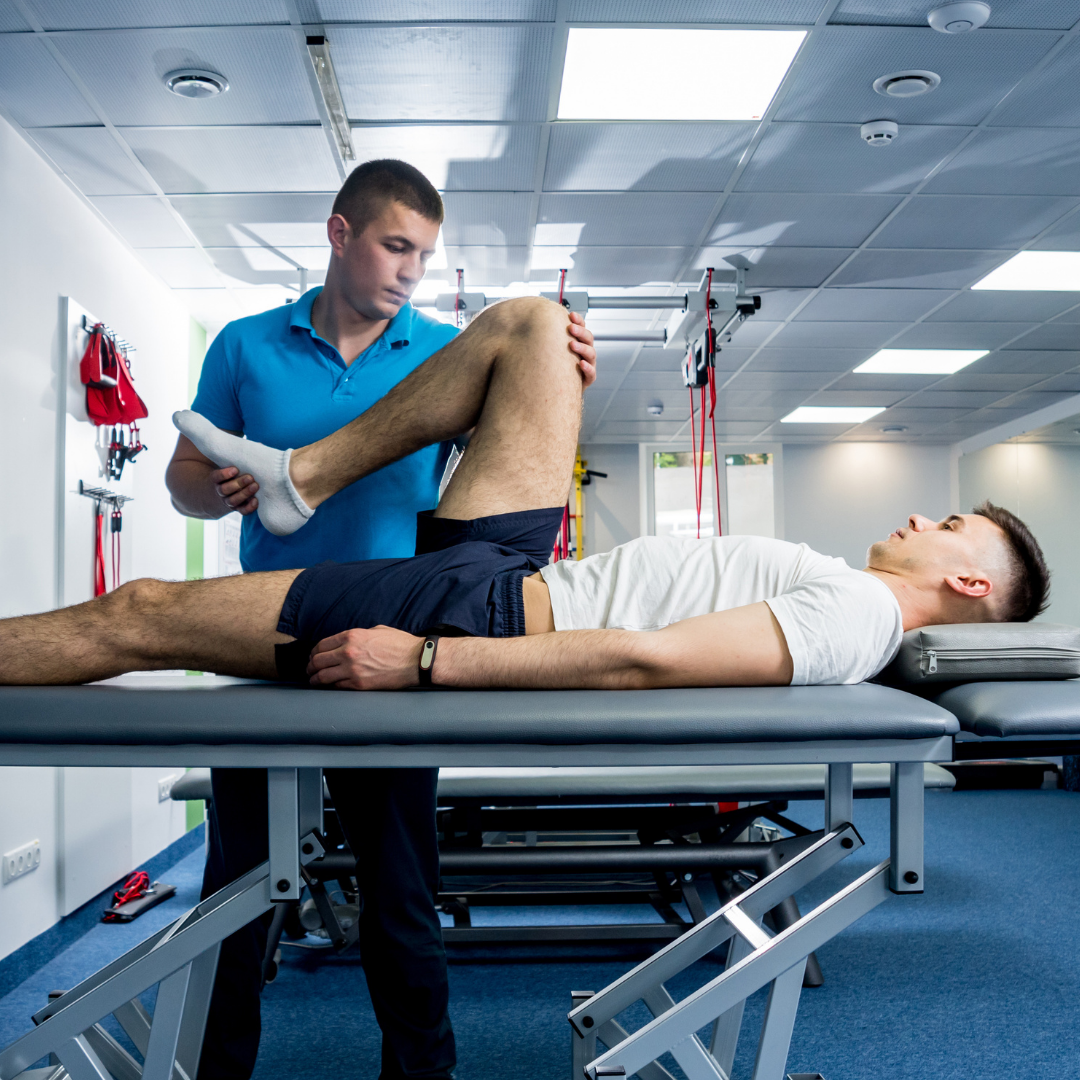

Picture two people standing beside an injured GAA player: one professional assesses and treats the injury and the other plans the journey back to full strength. This is a simple way to understand the difference between sports therapy and sports rehabilitation.
Sports therapy focuses on preventing, assessing, and treating injuries, while sports rehabilitation focuses on rebuilding movement, strength, and physical performance after an injury. The two fields overlap significantly, but they tend to emphasise different stages of the recovery journey.
GAA is just one of the many sporting environments in which sports therapists and sports rehabilitation professionals can build their careers. Their skills are relevant across virtually every sport – from grassroots participation to elite competition – and they support individual athletes, entire teams, or people returning to recreational activity.
If you see yourself becoming a sports therapist and building a career in sports therapy, rehabilitation, or performance support, a sports therapy degree is a strong starting point.
Portobello Institute's practical BSc (Hons) Sports Therapy programme, developed in collaboration with and awarded by University of Essex, prepares graduates for a range of roles across the sector, while also offering a direct pathway to postgraduate physiotherapy study.
What is Sports Therapy?
Sports therapy involves helping active people prevent injuries, manage musculoskeletal problems, and continue participating safely in their chosen activities.
A sports therapist could work with:
- A rugby player recovering from a hamstring strain
- A runner preparing to return to training after an Achilles tendon injury
- A gym member experiencing recurring shoulder pain
- An older adult who wants to remain physically active
- A recreational cyclist preparing for a charity event
And these are just a handful of examples. Anyone involved in sport or physical activity – whether professionally, at amateur level, or simply for enjoyment – may benefit from sports therapy at some stage.
The work can include injury assessment, movement screening, manual therapy, sports massage, exercise prescription, injury-prevention strategies, and planning a safe return to activity.
What is Sports Rehabilitation?
While sports therapy typically centres on preventing, assessing, and treating injuries, sports rehabilitation is about guiding the next stage of recovery.
It helps people rebuild movement, strength, physical capacity, and confidence after an injury or period of reduced activity. Rather than moving straight from rest back into sport or exercise, rehabilitation follows a structured, gradual process.
A rehabilitation plan is often exercise-based and may include:
- Managing pain and protecting the injured area
- Restoring mobility and comfortable movement
- Rebuilding strength and physical capacity
- Improving balance, coordination, and control
- Reintroducing running, jumping, or sport-specific movements
- Assessing readiness to return to activity
- Reducing the risk of the injury recurring
A rehabilitation professional does far more than provide a list of exercises. They assess the individual’s current abilities, design an appropriate programme, monitor progress, and adapt each stage according to how the person responds.
Like sports therapists, sports rehabilitation professionals work with athletes and non-athletes alike. Their clients may include people recovering from musculoskeletal injuries, managing long-term conditions, or overcoming other barriers to physical activity.
Sports Therapy Vs Sports Rehabilitation at a Glance
|
Area |
Sports therapy |
Sports rehabilitation |
|
Main emphasis |
Injury prevention, assessment, treatment, and return to activity |
Structured, progressive recovery of movement and physical function |
|
Typical starting point |
May begin at the initial assessment or early treatment stage |
Frequently becomes central once rehabilitation and exercise progression begin |
|
Common methods |
Assessment, manual therapy, massage, taping, exercise, and injury-prevention work |
Exercise rehabilitation, movement retraining, strength and conditioning, education, and graded return to activity |
|
Typical clients |
Athletes, active adults, workers and recreational exercisers |
Athletes and non-athletes recovering from injury, pain, or reduced physical capacity |
|
Work settings |
Sports clubs, clinics, gyms, events, private practices, and performance environments |
Rehabilitation clinics, sports teams, private practices, gyms, healthcare settings, and research environments |
|
Overall objective |
Help the client recover and return safely to their desired activity |
Restore function and build the capacity required for everyday activity or sport |
Do Sports Therapists Deliver Rehabilitation?
Although sports therapy and sports rehabilitation have different areas of emphasis, there is significant crossover between them.
Rehabilitation is a central part of many sports therapists’ work, particularly after injury assessment and treatment. They may prescribe exercise, restore movement and strength, monitor progress, and support a safe return to activity. Likewise, sports rehabilitation can include assessment, manual techniques, injury prevention, and client education.
Many roles in sports therapy span the full recovery process, from assessing and treating injuries to supporting rehabilitation, performance, and long-term physical health.
Is Sports Therapy the Same as Physiotherapy?
Sports therapy and physiotherapy share some common ground, but they are distinct professions with different training and career pathways.
Sports therapy focuses primarily on musculoskeletal health, helping active people prevent injuries, recover movement and strength, and participate safely in sport or physical activity.
Physiotherapy has a broader clinical scope, supporting people across the lifespan in areas including neurological, respiratory, paediatric, orthopaedic, disability, older-person, and musculoskeletal care.
In Ireland, the titles physiotherapist and physical therapist are legally protected. This means that, to use either title, a practitioner must complete an approved academic pathway and register with CORU, Ireland’s health and social care regulator.
A sports therapy or sport rehabilitation qualification should not, by itself, be described as a physiotherapy qualification. An undergraduate degree can, however, provide a valuable academic and practical foundation for further study.
Where a Career in Sports Therapy Can Take You
After completing a sports therapy degree, graduates can move straight into a wide range of professional roles. You could find yourself supporting players at a sports club, treating clients in a private clinic, guiding rehabilitation in a gym or performance setting, or building an independent practice of your own.
Your sports therapy career could even take you around the world. After completing the BSc (Hons) Sports Therapy at Portobello Institute through advanced entry, Garreth Lonergan went on to work as a therapist and Pilates instructor aboard a luxury superyacht in the Caribbean.
“The course gave me the skills to become a therapist and help others recover from injury and return to play. Now, I’m using those skills in my career on the yacht,” explains Garreth.
“It’s perfect for anyone passionate about becoming a therapist. The college gives you the motivation and skills to take your career to the next level.”
Read more about Garreth’s sports therapy career journey.
From Sports Therapy to Physiotherapy
For some students, a sports therapy degree is the starting point for further professional study and, thereafter, professional registration within healthcare. Those whose interests develop towards physiotherapy may choose to continue to a master’s programme.
Megan O’Shea’s journey is one example. After graduating with a BSc (Hons) Sports Therapy, she began working in sports therapy and performance roles while progressing to Portobello Institute’s MSc Physiotherapy (Pre-registration), which prepares graduates to apply for CORU registration and practise as qualified physiotherapists in Ireland.
“My qualification from Portobello Institute helped me get into the physiotherapy master’s programme, which I absolutely love,” says Megan.
“I’m really positive that I made the right choice in pursuing this career path. The practical experience I gained in sports therapy has been invaluable and has definitely paved the way for me to progress into physiotherapy.
“I’m excited about the future and the opportunities this qualification has opened up for me.”
Read more about Megan’s experience and career progression.
Discover Your Sports Therapy Career Path
Portobello Institute's BSc (Hons) Sports Therapy can prepare you to begin a career in sports therapy or provide the academic and practical foundation to progress to further study in physiotherapy. The direction you choose is shaped by your career goals and the opportunities you want to pursue.
Explore the full programme here or book a call with Career Pathway Consultant Tomas Ashe for personalised guidance.